Matriarchs, Mothers & Makers of the Wild
This Women’s Month, we find ourselves looking not only to the phenomenal women on our team but also to the females of the wild, whose roles are woven into the very balance of the bushveld.
This Women’s Month, we find ourselves looking not only to the phenomenal women on our team but also to the females of the wild, whose roles are woven into the very balance of the bushveld. Of course, wildlife doesn't live by our human ideas of strength, leadership or devotion. Their world is guided by instinct. Yet, when we take a closer look, it's impossible not to be moved by the roles female animals play across so many species.
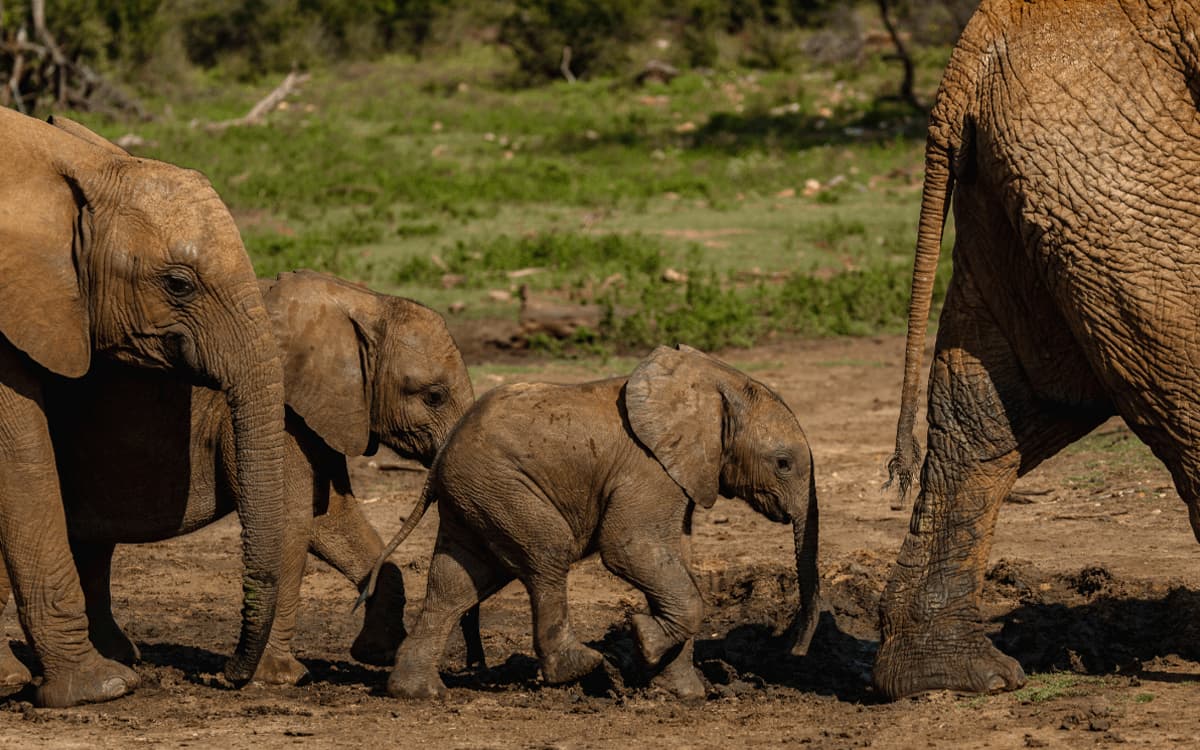
Few examples are as iconic as the elephant matriarch. In elephant herds, older females draw on decades of knowledge to guide their families toward water sources and help younger members navigate challenging and ever-changing landscapes. To watch a herd move together, calves tucked safely among their mothers, aunties and older sisters, is to witness memory in motion
Lionesses, too, are central to the life of the pride; fulfilling the roles of protector, nurturer and provider in equal measure.
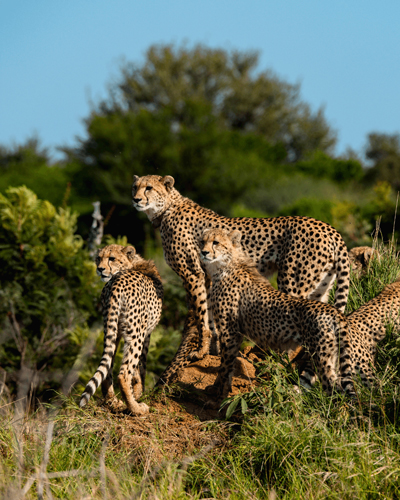
In comparison, cheetah mothers raise their cubs largely alone, teaching them how to hunt, hide and stay alert in a world where speed is only one part of survival. Many of our guests and followers will remember Ashia, the female cheetah whose five cubs were left orphaned at a young age. Even in death, the lessons she taught her sons live on as they continue to survive and thrive within the Madikwe Game Reserve.
Even the often-misunderstood spotted hyena offers a fascinating example of female influence. Hyena clans are famously female-led with social rank being passed down directly through maternal lines. Females are also larger, heavier and more muscular than their male counterparts. While females typically stay in their birth clan, males leave the group at maturity, ultimately joining new clans at the absolute bottom of the hierarchy.
The breeding African wild dog also plays a vital role within her family structure. After giving birth in a den, she stays close to her pups while the wider pack helps feed and protect them. Adults return from hunts to regurgitate food for the mother and young while others help guard the den and keep watch. It's a remarkable system of shared care, where the survival of the next generation depends not on one individual but on the strength and provision of the pack.
And then there are the smaller stories, which are no less remarkable.
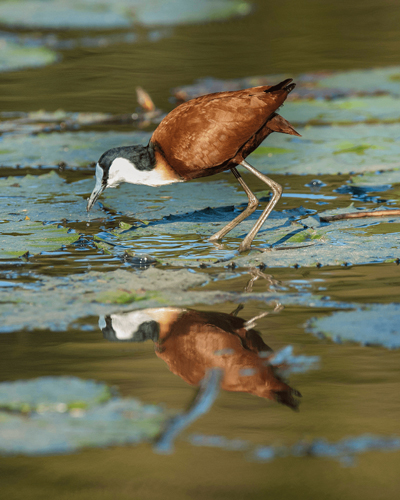
Along Madikwe’s waterways, the African jacana turns gender expectations upside down. In this species, females may mate with more than one male while males take on much of the incubation and chick-rearing. Among hornbills, the female’s role is equally extraordinary: in species such as the Southern Yellow-billed Hornbill, she seals herself safely inside a nesting cavity, leaving only a narrow slit through which the male feeds her and, later, their chicks.
From elephants to jacanas, cheetahs to hornbills, the wild reminds us that female roles are wonderfully varied. Sometimes they lead. Sometimes they nurture. Sometimes they hunt, defend or simply hold the knowledge that helps a family survive. In the bushveld, female strength is lived instinctively every day, in countless ways.
More news

The Wilds of the wild
Some places become a home away from home, and for Sarah and Steve Wild, The Royal Madikwe is just that. Their surname feels rather fitting for a couple whose hearts have been captured by the African wilderness.

From Madikwe to the World: The Royal Madikwe on Fred’s Ultimate Hotels
Every so often, a moment comes along that causes you to see something familiar through entirely new eyes. For us, that moment arrived with Fred’s Ultimate Hotels, a brand-new Channel 4 series hosted by television personality and hospitality expert Fred Sirieix as he travels the world in search of some of the finest hotels.

Safari Style with Substance: Introducing Ballo Eyewear at The Royal Madikwe
On safari, the light has a language of its own. It shimmers off waterholes in the early morning, bright with the promise of a new day, and softens the plains at dusk as the day’s adventures settle slowly into memory.